When did gimbal stabilisation become this intuitive? As professional videographers, we know all too well the frustration of spending precious shoot time wrestling with balance adjustments, battery anxiety on long days, and tracking systems that demand external monitors. But all that might just well be a thing of the past.
The DJI RS 5 gimbal arrived in late January 2026 promising to solve these workflow friction points, but does it genuinely deliver for professional work or simply add incremental updates? Time to find out whether it’s the best gimbal for filmmakers in 2026, or simply another forgettable gimmick.
DJI RS 5 Overview
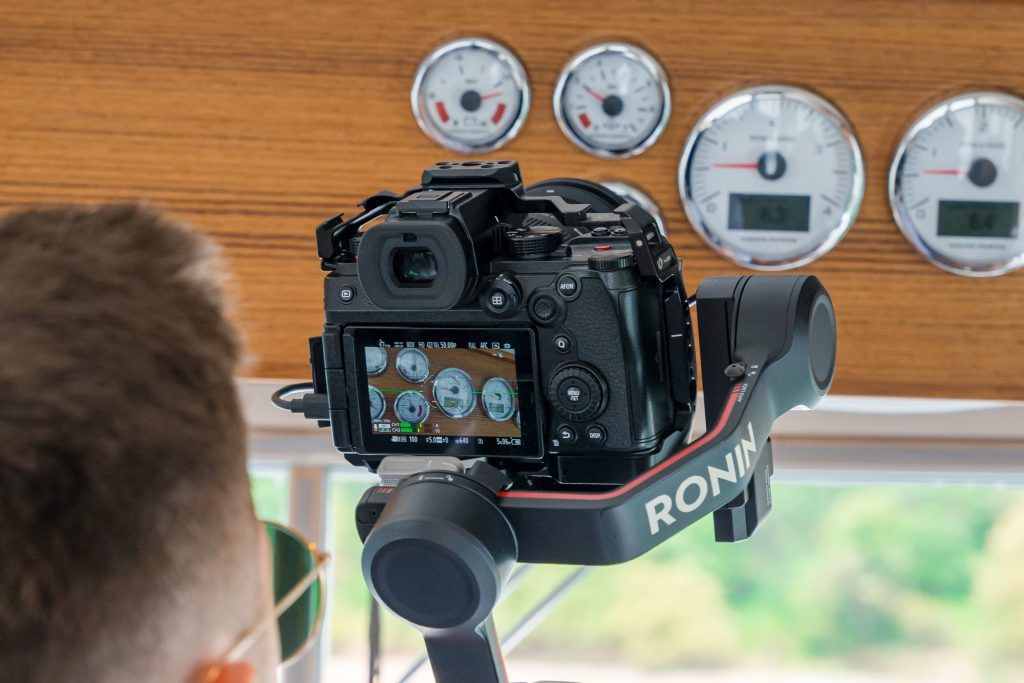
The DJI RS 5 gimbal sits at the core of DJI’s Ronin ecosystem, designed specifically for mirrorless and compact cinema camera setups up to 3kg. This professional camera gimbal targets working videographers, production companies, and commercial content teams who need reliable stabilisation without the bulk of Pro-series models.
Released to refine rather than revolutionise, it addresses the specific pain points that slow down professional shoots: balancing speed, battery endurance, and integrated tracking capabilities that eliminate the need for external monitors or smartphone apps during critical moments.

Key Functions and Features
Impressive numbers might look great on a spec sheet, but that’s not really the be all and end all. Making the shoot day easier? Now that’s a different story. That’s where the DJI RS 5 features make this gimbal truly excel.
When working against the clock, here are the things that actually matter:
Stabilisation and Motor Performance
The fifth-generation algorithm pairs with 50% increased peak motor torque, delivering noticeably smoother footage during rapid directional changes and high-speed tracking. This matters when capturing dynamic subjects where older gimbals struggle to keep up.
Intelligent Tracking Module
Next, you have a magnetic attachment that transforms the 1.8-inch OLED touchscreen into a live video monitor. Tap to track people, vehicles, or custom objects without external devices. For solo operators, this removes the friction of app-based control entirely.
Electronic Briefcase Handle
Unlike passive handles, this NATO RSA-compatible version integrates dual joysticks, mode switching, and record buttons. Low-angle shooting becomes genuinely practical rather than a compromised workaround.
Battery and Charging
And battery anxiety? What battery anxiety? With fourteen hours of runtime with one-hour charging, the RS 5 addresses the RS 4’s most frustrating limitation. You get plenty of juice and can fully recharge during a standard lunch break rather than carrying multiple batteries.
Real-World Performance
But what about real-world performance? How does the RS 5 fair when put to the test? Professional use reveals where the DJI RS 5 review metrics translate into tangible benefits. Balancing takes under a minute thanks to fine-tuning knobs on all three axes combined with Teflon interlayers that glide smoothly rather than catching, and the automated axis locks eliminate the setup delays that plague older models.
During long shoot days, the 14-hour battery genuinely holds up, while the Z-axis indicator provides real-time feedback on operator technique, coaching smoother movement through its traffic-light colour system.
The DJI RS 5 stabilisation proves particularly effective when capturing scenic greens, tracking golfers through tee shots, or following fast-moving subjects where previous-generation gimbals introduced micro-jitters. The tracking module locks onto subjects with surprising tenacity, maintaining frame composition even during unpredictable movement patterns.
DJI RS 5 vs Previous Models
The DJI RS 5 vs RS 4 comparison reveals meaningful rather than marginal improvements. Motor torque has been increased by 50%, the battery charges 60% faster (one hour versus 2.5 hours), and runtime has been extended by two hours.
The DJI RS 5 gimbal introduces fine-tuning knobs across all axes where the RS 4 limited them to the base plate alone, cutting balancing time substantially. But the most significant workflow shift must be the intelligent tracking module, as it brings functionality previously requiring smartphones or external monitors directly onto the gimbal itself.
Despite this, this professional camera gimbal maintains the same 3kg payload capacity and similar physical dimensions. If you own an RS 4 Pro and rarely work solo, the upgrade justification weakens considerably. But if you’re coming from the RS 3 or earlier models, you’ll notice dramatic usability improvements.
Pros and Limitations
The DJI RS 5 gimbal balances considerable strengths against specific constraints worth acknowledging:
Strengths
- Fifth-generation stabilisation algorithm delivers exceptionally smooth footage during rapid movements
- One-hour charging and 14-hour runtime eliminate battery anxiety on standard shoot days
- Integrated tracking removes dependency on external monitors for solo operators
- Fine-tuning knobs on all axes make balancing genuinely quick rather than tedious
- Seamless Bluetooth connectivity across major camera brands
Limitations
- 3kg payload ceiling restricts use to mirrorless setups, excluding heavier cinema cameras
- Combo kit pricing (which includes the essential tracking module) pushes cost significantly higher than base unit pricing suggests
- No native LiDAR support requires external modules for manual lens autofocus
- Learning curve remains steep for operators new to using a gimbal for professional video work
Bottom line is that the DJI RS 5 features deliver where they matter most for commercial production, though budget-conscious teams should factor in the full Combo kit cost rather than base pricing.
Who Is the DJI RS 5 Best For?
This professional camera gimbal suits working videographers running mirrorless setups, agency video teams producing commercial content, and filmmakers who frequently work solo or with minimal crew.
The tracking module proves invaluable for branded content creators juggling multiple roles simultaneously. Pairing smooth gimbal work with audio excellence in video marketing creates genuinely polished deliverables that justify premium rates.
However, it represents overkill for hobbyists or those primarily shooting static interviews. And teams running RED, ARRI, or other cinema cameras exceeding 3kg should wait for the anticipated RS 5 Pro instead.
Verdict: Is It the Best Gimbal for Professional Video in 2026?
For mirrorless-based professional workflows, yes. The DJI RS 5 gimbal removes friction points that slow production rather than adding complexity disguised as features. The RS 5 continues DJI’s approach to professional-grade tools, much like their recent Mavic 4 Pro demonstrates in aerial cinematography.
The integrated tracking module, faster charging, and refined stabilisation algorithm justify the investment for solo operators and commercial production teams.
If you’re already running an RS 4, assess whether those specific upgrades match your workflow needs. But for everyone else working at a professional level, this sets the current standard.
Book a Videography Shoot with Bold Media Today
At Bold Media Agency, we’re always at the cutting edge, making use of the latest technologies like the DJI RS 5 to provide our clients with the best content possible. We offer professional videography services that deliver cinematic results for brands across Dorset and beyond.
And the best part is that you get the benefit of the RS 5 without the investment.
If you’d like to discuss a project with us, give us a call on 01202 028178 today. Alternatively, fill out our online contact form, and we’ll be in touch.